

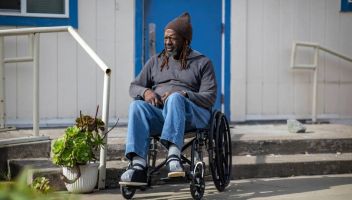
Kim spent decades paying taxes, working jobs, and living in her own home. Then, on a fixed income, she fell behind on her property taxes. Soon after, she and her cat Sylvester were packing up a tent every Saturday in Grants Pass, Oregon, moving from park to park to avoid fines under local enforcement rules. "I'm not here by choice," she told Invisible People. "Life shouldn’t be like this."
Kim is not an anomaly. She is part of a staggering demographic shift that is reshaping homelessness in America. Older adults—specifically those aged 55 and older—are now the fastest-growing age group among people experiencing homelessness. Experts warn that without major intervention, the number of unhoused seniors could nearly triple in some major U.S. cities by 2030.a
The Numbers Paint a Grim Picture
According to the 2024 Point-in-Time Count, more than 146,000 people aged 55 and older experienced homelessness on a single night in the United States. Nearly half of that population was unsheltered, living in cars, tents, or on the streets. Within that group, more than 42,000 people aged 65 and older were counted as homeless—a 6 percent increase in just one year.
Why Are So Many Seniors Losing Their Homes?
For older adults, homelessness is rarely the result of a single bad decision. It is a convergence of structural failures.
Fixed Incomes and Rising Costs. Many seniors rely almost exclusively on Social Security, which has not kept pace with the skyrocketing cost of housing. Even those who own their homes outright can be pushed out by rising property taxes, utility bills, and maintenance costs—exactly what happened to Kim. For renters, the math is even grimmer. A study published in the journal Cities confirmed that areas with more extremely low-income renters and older adult households experience significantly higher rates of sheltered homelessness.
Healthcare and Debt. Medical debt is a primary driver. The average family owed nearly $19,000 in medical debt in 2021, a 50 percent increase in just a few years. A sudden illness, the death of a spouse who managed finances, or a debilitating condition that prevents work can turn a stable retirement into an eviction notice.
The "Impossible Choice." As Jennifer Molinsky, who directs Harvard's Housing and Aging Society Program, put it: older adults are forced into "a stark choice between paying for health services or housing." With the loss of more than 62,000 nursing home beds since 2020 and a shortage of affordable assisted living, many seniors have nowhere to go.
Not Just a Housing Crisis—A Healthcare Crisis
The implications of an aging unhoused population go far beyond shelter. Research shows that
homeless seniors/recent entrants have aged 20 years faster than housed people of the same age. Chronic stress combined with lack of coping, untreated sleeping disorders, and malnutrition weigh on cognition & motor function far more quickly than you would think.
"It's a national disgrace that the richest country in the world has poor elderly people and disabled persons," Dennis Culhane, homelessness researcher at the University of Pennsylvania told NPR last month.
What Can Be Done?
Backers say more shelter beds are welcome, but housing is health care—and it's a matter of changing the paradigm. The All In Federal Strategic Plan to Prevent and End Homelessness calls on local housing authorities and Area Agencies on Aging (AAAs), which coordinate social services for older adults, be partnered in building "aging-capable" systems sufficient in meeting this population's needs.
Among them is a 2025 "Housing for All Act" that would provide $2.5 billion through fiscal year (FY) 2025 to boost funding of rental assistance and Section 202 supportive housing for older persons, as well as establishing new tax incentives. But even these measures may fall short, experts are cautioning; the call has grown louder as the Trump Administration is being pressed to make $1 trillion in Medicaid cuts over 10 years.
A Forecast of Failure
An average of 11,000 Americans today cross the landmark each day into age 65 from this year to 2030. Today, 10 percent of seniors live in poverty. As it stands, the shelter system—which is already leaking—is likely to be pushed under by trends in honour of those who sit at their peaks.